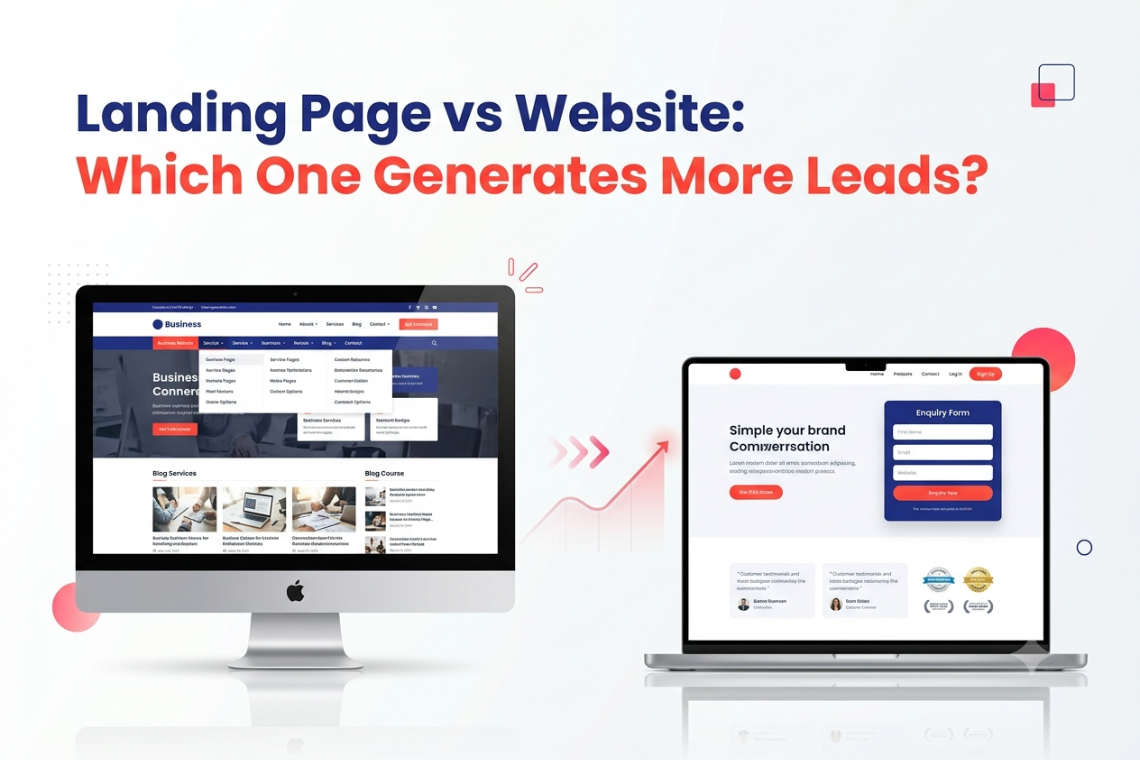
Landing Page vs Website: Which One Generates More Leads?
Getting people to visit your website is an achievement, but traffic alone doesn't grow a business. What really matters is whether those visitors take the next step—fill out an enquiry form, request a quotation, book a consultation, or contact your team.
Many businesses invest in SEO, Google Ads, or social media campaigns expecting a steady flow of enquiries. When the results fall short, the first reaction is often to blame the marketing campaign. In reality, the issue is frequently the destination where visitors are being sent.
Now compare that with a focused page that explains one service, highlights its benefits, answers common questions, includes customer testimonials, and ends with a simple enquiry form. The decision becomes much easier because there are fewer distractions.
This is the key difference in the landing page vs website discussion.
Both play an important role in digital marketing, but they aren't designed to achieve the same objective. Understanding when to use each one can help businesses generate more qualified enquiries , improve conversion rates, and get better returns from their marketing investment.
Whether you're targeting customers in Dubai or anywhere else in the UAE, choosing the right destination for your visitors can have a measurable impact on lead generation.
Landing Page vs Website
A landing page is a standalone page created to achieve one specific goal, such as collecting enquiries or promoting a single offer. A website contains multiple pages that provide detailed information about a business, its services, and its expertise. Landing pages are typically more effective for marketing campaigns, while websites support SEO, credibility, and long-term business growth.
Understanding the Difference
Although the terms are often used interchangeably, a landing page and a website solve different problems.
A website represents your complete online presence. It allows potential customers to learn about your business, explore your services, read helpful articles, view testimonials, and understand why they should choose your company.
A typical business website may include:
 Home
About Us
Services
Blog
Portfolio
FAQs
Contact Us
Home
About Us
Services
Blog
Portfolio
FAQs
Contact Us
Visitors can move between these pages depending on the information they're looking for.
A landing page follows a different approach.
Instead of encouraging visitors to browse, it focuses their attention on one action.
That action might be:
Requesting a quotation
Booking a consultation
Scheduling a demo
Downloading a brochure
Registering for an event
Completing an enquiry form
Every section of the page is designed to support that single objective. By removing unnecessary navigation and limiting distractions, visitors can concentrate on the offer that brought them there in the first place.
Why Many Businesses Don't Get the Results They Expect
One pattern appears regularly during website and conversion audits.
Businesses invest time and money in attracting visitors but send every campaign to the same homepage, regardless of the visitor's intent.
Someone arriving through an organic search often wants to explore. They may compare services, read blog articles, check testimonials, or learn more about your company before making a decision.
Someone clicking on a paid advertisement usually has a different expectation. They want immediate answers about the offer they selected.
When both audiences are directed to the same page, neither experience is fully optimised.
This is one of the reasons some marketing campaigns generate plenty of clicks but relatively few enquiries.
Matching the destination page to the visitor's intent often improves engagement without increasing advertising spend.
When a Website Is the Better Choice
A professionally developed website remains one of the most valuable long-term investments a business can make.
It builds trust, supports search engine visibility, and gives potential customers the information they need before contacting your business.
A website is usually the right choice when your objective is to:
Build long-term brand credibility
Improve organic search rankings
Publish educational content
Showcase multiple services
Share case studies and client testimonials
Strengthen your local SEO presence
Support customers throughout the research process
Because a website answers a wide range of questions, it often becomes an important source of consistent website leads through organic search.
Instead of focusing on one campaign, it supports your overall digital presence and helps potential customers understand your business over time.
When a Landing Page Is the Better Choice
A landing page performs best when the goal is simple: encourage visitors to complete one specific action.
Instead of asking users to browse through multiple pages, it presents a clear message, a relevant offer, and a straightforward call to action.
A dedicated lead generation landing page is particularly effective for:
Paid search campaigns
Social media advertising
Free consultation offers
Limited-time promotions
Webinar registrations
New service launches
Downloadable resources
Because the visitor has fewer decisions to make, the journey from arrival to enquiry becomes much smoother.
In many campaign reviews, we've found that replacing a general homepage with a focused landing page improves conversion rates without changing the advertising budget. The traffic remains the same—the experience simply becomes more relevant to the visitor's expectations.
Which Generates More Leads?
For individual marketing campaigns, a landing page generally generates more leads because it focuses on one offer and one call to action. A website is more effective for building credibility, supporting SEO, and helping potential customers research your business. Businesses that combine both as part of their digital strategy often achieve the strongest long-term results.
Landing Page Optimization Tips That Improve Lead Generation
Creating a landing page is only the first step. The real difference comes from how well it guides visitors towards taking action.
During landing page reviews, one issue appears repeatedly: businesses try to communicate too much on a single page. They include multiple offers, several call-to-action buttons, lengthy paragraphs, and full website navigation. Instead of helping visitors make a decision, the page creates unnecessary distractions.
A successful landing page strategy keeps things simple. Every headline, image, and section should support one clear objective.
Here are some practical landing page optimization tips that consistently improve conversions:
Write a headline that matches the message in your advertisement or campaign.
Explain the value of your offer within the first few seconds.
Keep navigation to a minimum so visitors stay focused.
Use one primary call to action throughout the page.
Ask only for essential information in your enquiry form.
Include genuine testimonials or client reviews to build trust.
Display trust signals such as certifications, awards, or recognised partnerships where relevant.
Make sure the page loads quickly on both desktop and mobile devices.
Small improvements often produce noticeable results. In many cases, simplifying a page performs better than adding more design elements or extra content.
Common Mistakes That Reduce Website Leads
Whether visitors arrive through search engines, advertising campaigns, or social media, a few common issues can reduce your chances of generating enquiries.
These include:
Slow-loading pages
Confusing navigation
Multiple competing calls to action
Generic headlines that don't explain the offer clearly
Long or complicated enquiry forms
Missing customer reviews or testimonials
Poor mobile experience
Outdated or incomplete content
Each of these creates friction in the customer journey. Even if your marketing attracts the right audience, unnecessary obstacles can prevent visitors from taking the next step.
Can a Landing Page Improve Google Ads Performance?
In many situations, yes.
When someone clicks on an advertisement, they expect the page to reflect the promise made in that ad. If the message is consistent from the advertisement to the landing page, visitors are more likely to stay engaged and complete the desired action.
A well-planned landing page can contribute to:
Better user experience
Higher conversion rates
Lower bounce rates
Improved Google Ads Quality Score
More efficient use of your advertising budget
While campaign success depends on several factors, directing paid traffic to a focused landing page generally produces better results than sending every visitor to a general homepage.
Why the Best Strategy Uses Both
One of the biggest misconceptions is that businesses must choose between a website and a landing page.
In reality, they work best together because they serve different purposes.
Your website helps people understand your business. It builds trust, improves visibility in search engines, and provides detailed information about your services.
A landing page supports specific marketing campaigns by encouraging visitors to complete one clear action.
Together, they create a stronger customer journey.
Your Website Helps You:
Build credibility
Improve long-term SEO
Showcase multiple services
Publish helpful content
Strengthen your online presence
Your Landing Page Helps You:
Increase campaign conversions
Generate qualified enquiries
Promote one service or offer
Reduce visitor distractions
Support paid advertising campaigns
Businesses that combine both approaches are often able to generate more consistent enquiries while making better use of their marketing budget.
Choosing the Right Approach for Your Business
The right choice depends on what you're trying to achieve.
If your priority is improving search visibility, educating potential customers, and building long-term credibility, investing in a well-structured website is the right approach.
If your goal is to maximise enquiries from a specific campaign or promotion, a dedicated landing page will usually deliver stronger conversion rates.
At Webtech Digital, every project starts with understanding the client's objectives, target audience, and marketing strategy. Rather than recommending the same solution for every business, the focus is on identifying practical improvements that create a better user experience and support sustainable lead generation.
Final Thoughts
The discussion around landing page vs website isn't about deciding which one is better in every situation.
Each serves a different purpose.
A website helps people learn about your business, explore your services, and build confidence in your brand over time.
A landing page removes unnecessary distractions and focuses on converting interested visitors into enquiries.
When both are used strategically, they complement each other. One supports long-term visibility and credibility, while the other helps turn marketing traffic into measurable business opportunities.
Instead of asking which option generates more leads, consider which one is better suited to your current marketing objective. That approach usually leads to stronger campaigns, better conversion rates, and more sustainable business growth.
Frequently Asked Questions
1. What is the difference between a landing page and a website?
A landing page is a standalone page designed to achieve one specific goal, such as collecting enquiries or promoting a single offer. A website consists of multiple pages that provide broader information about a business, its services, and its expertise.
2. Which is better for lead generation?
A lead generation landing page is generally better for individual marketing campaigns because it focuses on one clear call to action. A website is essential for building trust, improving SEO, and helping potential customers learn more about your business before making a decision.
3. Do I need both a website and a landing page?
In many cases, yes. A website supports long-term online visibility, while landing pages are designed to improve conversions from advertising campaigns, email marketing, and promotional activities.
4. Can a landing page improve Google Ads performance?
Yes. A dedicated landing page provides a more relevant experience for visitors by matching the message in your advertisement. This can improve engagement, increase enquiries, and contribute to better campaign performance.
5. When should businesses use a landing page?
Businesses should use a landing page when promoting a specific service, running paid advertising campaigns, launching a new offer, collecting leads, or encouraging visitors to complete one specific action.
Turn More Visitors into Qualified Leads
Driving traffic to your online presence is only the beginning. Converting that traffic into enquiries requires the right message, the right user experience, and a strategy built around your business goals. Whether you need a high-converting landing page design, a professionally developed business website, or expert guidance on improving your landing page strategy, Webtech Digital can help you create digital solutions that generate meaningful business results. Contact our team today to discuss your project.
- WordPress Development
- Web Development
- Shopify Development
- Custom e-Commerce
- Custom Software
- Bulk SMS & Business Email
- Graphic Designing
- Logo And Brand Designing
- Website Designing
- Banner Designing
- Digital Marketing
- Search Engine Optimization
- Social Media Optimization
- Social Media Marketing
- Content Marketing
- Google ADS Pay Per Click
- Webtec Portfolio